

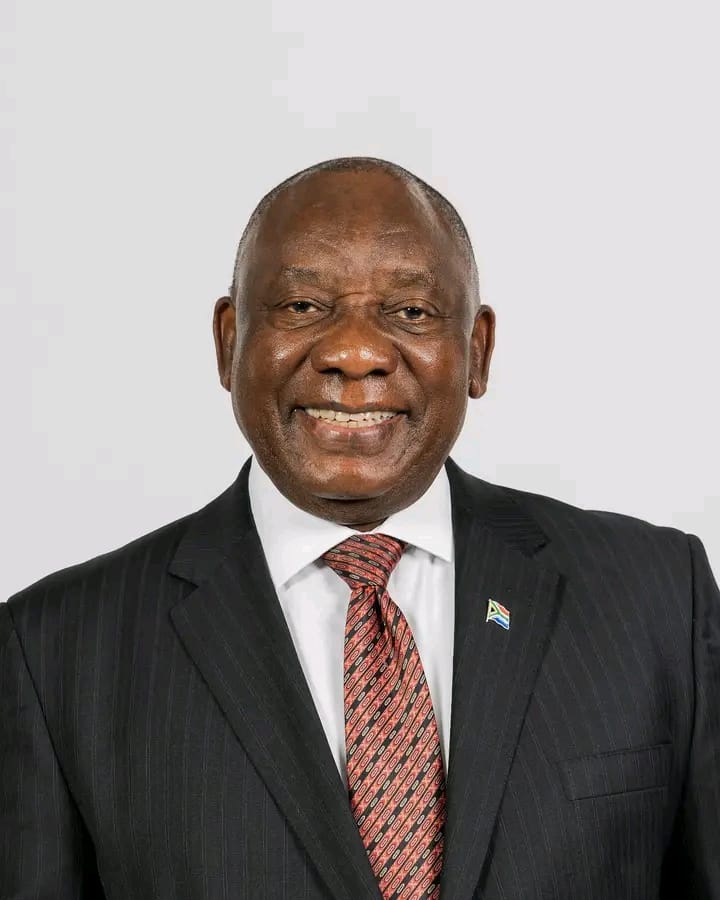
Plea to Ramaphosa: Please Call for a Referandum

 President of Republic of South Africa Cyril Ramaphosa
Dear readers, I am taking this opportunity to publicly ask President Cyril Ramaphosa to call for a referandum regarding the issue of illegal foreigners in South Africa.
A referandum will put beyond doubt as to how South Africans feel about the prolonged, illegal stay by foreigners in the country.
Government decree, police warnings or dubious Constitutional Court decisions won’t satisfy or deter those who feel strongly about this matter.
Ramaphosa and his cabinet Ministers have already threatened that those found to be engaged in any form of intimidation against illegal foreigners will face the wrath of the law.
And mention has been made in some quarters about the possibility of the country’s soldiers being unleashed on those who will be taking action against illegal foreigners on 30 June this year.
Organisations like March and March as well as political party Operation Dudula have made it clear that come 30 June 2026, they are going to flood the streets, hunt down illegal foreigners and hand them over to the authorities peacefully for the purpose of deportation.
March and March as well as Operation Dudula assert that they have the right as South African-born citizens to conduct citizen’s arrests and apprehend illegal foreigners.
In recent years the police have taken strong action against leaders of both March and March and Operation Dudula during protest gatherings; with arrests, teargas, rubber bullets and even pepper spray being used to disperse protestors belonging to the aforesaid entities.
March and March Movement leader Jacinta Ngobese-Zuma was issued with a warning statement by the police on 27 January this year regarding charges of public violence and incitement to public violence.
This after she had led a protest march and picketing outside Addington Primary School in Durban to protest against the prioritisation of children of foreigners over local South African learners in terms of admission at that school.
It must be mentioned here without fear or contradiction that the government and the Department of Basic Education don’t have the amount or numbers of the learners that they must build schools for in South Africa because children of undocumented immigrants show up at schools and are given priority regarding admission at the expense of local South African-born children.
The so-called online application system is a sinister plan by the government and the Department of Education to make sure that children if foreigners get accommodated at schools while local South African-born children have to go to far-flung areas to be admitted to school.
On 4 November 2025 former Operation Dudula leader Zandile Zee Dabula was issued with an interdict by some high court which permanently barred her from “harrassing foreigners and demanding to see their identity documents, and also from obstructing their access to schools and public health care facilities.
Again it must be mentioned without fear or favour that the government and the Department of Health don’t provide more medicines or nurses or doctors at public health facilities to accommodate the ever-growing number of foreigners who seek medical health at these institutions.
Yet again it must be mentioned that many if not all African countries take asylum seekers to special safety camps where the government of that country will directly provide the asylum seekers with health care and food, so as to avoid a situation whereby the immigrants or assylum seekers will compete with local citizens for such basic needs.
Now by encouraging foreigners to go and seek medical help, education and even jobs at facilities that should prioritise local South African citizens, the government is stealing from the resources of the poor, ordinary citizens of South Africa because the said resources belong to the poor and the downtrodden and if they don’t get jobs or medication or admission at schools at public facilities then it means the government is taking away that which belongs to the poor as members of a sovereign state and gives it to foreigners who are not part of the sovereignty of the state of South Africa as they ( foreigners) pay allegiance to their own countries of birth.
The question that comes to mind is as follows:
1. How many jobs has the government created for the foreigners that it allows to come into this country?
2. How does the government think foreigners will make a living in this country if they don’t resort to crime or working at firms and factories where ordinary South Africans should be working?
Now the ball is in Ramaphosa’s court to deal with the issue of illegal foreigners once and for all.
Many state presidents in South Africa have over the years been faced with moments of reckoning whereby they were compelled to make watershed speeches or announcements that would change the course of South Africa’s history.
For Ramaphosa to stand up and tell Parliament that the government was in the process of dealing with the issue of illegal migration while at the same time repeating that illegal foreigners must be accorded human rights in this country sounds equivocal.
He must just come out unequivocally and announce whether illegal foreigners will be deported en masse with immediate effect or whether no illegal foreigners will ever be deported irrespective of the manner they have used to enter the country.
And if he has a problem ruling either way, the last option for him is to call for a referandum so that the people of South Africa themselves will be the ones who have the final say regarding the issue of illegal foreigners.
The results of the referandum will notify all stakeholders, warring factions, self-made experts and politicians as to how South Africans feel about this debilitating issue.
The last time a referandum was held in South Africa was on 17 March 1992 whereby white voters of this country fearlessly voted “yes” for the continuation of negotiations by the then ruling National Party with organisations like the ANC to bring about democratic governance in the country, and do away with the system of apartheid.
In the late 1980s then state president PW Botha failed to live up to expectations in his speech dubbed “Crossing the Rubicon,” whereby he was expected to announce the release of then imprisoned Nelson Mandela, the unbanning of liberation movements like the ANC, SACP and the PAC.
But on 2 February 1990 the then president FW de Klerk boldly announced the release of Nelson Mandela, the unbanning of all prohibited political organisations as well as the National Party’s commitment to a negotiated settlement with black liberation movements to bring about the demise of the system of apartheid.
Ramaphosa knows this piece of information very well and needs no introduction to it.
And Ramaphosa is obviously concerned that the planned 30 June 2026 protests and evictions of illegal immigrants may result in a massacre if soldiers open fire on protestors.
President Ramaphosa doesn’t want another incident which is similar to the Marikana Massacre, for which some people still put the blame on him.
Back then, Ramaphosa famously or infamously called upon the police to take ” concomitant action” against the Lonmin mine workers who were on strike demanding salary increases.
This led to scores of striking mine workers being killed, maimed and injured after police opened fire on them.