

1976: the Year That Shaped My Life

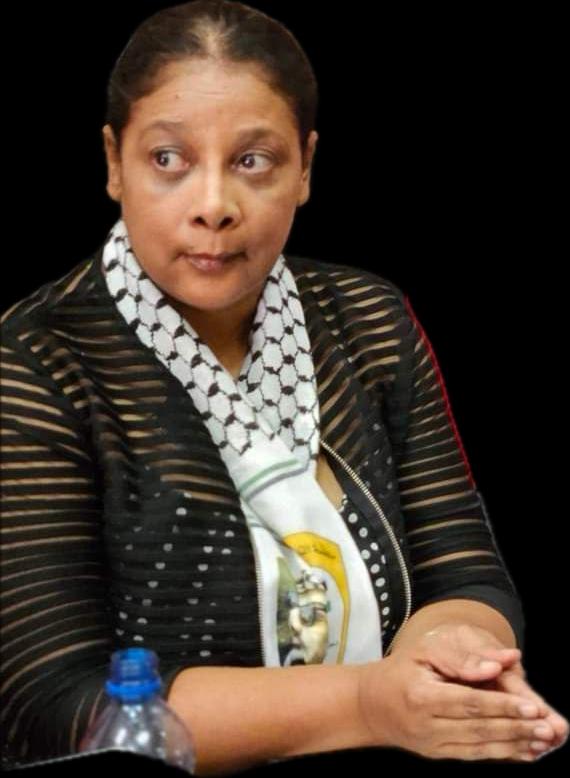
 Dr Reneva Fourie political analyst specialising in governance, development ans security
Dr Reneva Fourie
Policy analyst specialising in governance, development and security
In 1976, I was in my second year at De Klip Primary School, a bilingual English and Afrikaans school in Grassy Park, Western Cape. South Africa was firmly under apartheid rule, and every aspect of daily life was shaped by racial segregation and discrimination.
Like many others, I was officially classified as “coloured,” a label imposed by the apartheid government that determined where I could live, learn and socialise.
Grassy Park was considered one of the more affluent areas designated for coloured people as the suburb was comprised of privately built homes.
The reality, however, was more complex.
Grassy Park was predominantly a working-class community made up of construction workers, teachers, academics, healthcare workers, religious leaders and small business owners. While many families valued education and hard work, they remained subject to the same oppressive laws and restrictions that governed the lives of all non-white South Africans.
From a young age, I became increasingly aware of the restrictions apartheid imposed on my life.
My late father, who came from Queenstown in the Eastern Cape, and my maternal grandfather, who came from Simonstown in the Western Cape, both played important roles in shaping my political consciousness.
Their own family histories reflected the racial complexities of South Africa: my father had a coloured father and a white mother, while my grandfather had a coloured mother and a white father.
Both openly expressed their contempt for the apartheid state.
Travelling by train meant sitting in designated non-white coaches, a rule my father often refused to obey, resulting in frequent confrontations with the police.
Many beaches, parks and public spaces were reserved exclusively for white people.
My grandfather would occasionally take me to these places, staying only briefly to avoid police harassment.
The stark contrast in their beauty and maintenance revealed the profound inequalities at the heart of apartheid.
One of my earliest political memories involved Republic Day celebrations at school.
Every year, pupils were required to stand at attention while the South African flag was raised and to sing “Die Stem,” the national anthem of the apartheid government.
In my first year at school, I returned home and told my parents that we had participated in the ceremony.
They immediately instructed me never to sing the anthem or stand in respect of the flag again.
Although I did not fully understand their reasoning at the time, their message that the symbols of apartheid did not represent us was clear.
The following year, 1976, became one of the most significant years in South African history.
Across the country, students rose up in protest against the apartheid education system and, in particular, against the government’s attempt to impose Afrikaans as a medium of instruction.
The uprising, which began in Soweto, quickly spread throughout the country.
At De Klip Primary, learners also joined the nationwide wave of resistance. That year, pupils burned the apartheid flag as an act of defiance.
Although I was only seven years old, I joined the protests alongside older students.
I remember chanting “Black Power” without fully understanding its political meaning. Yet those words had a profound effect on me.
They instilled a sense of pride, dignity and self-confidence that has remained with me throughout my life.
Looking back, I believe those experiences helped shape a resilience that has made it difficult for others to intimidate or bully me, even decades later.
The events of 1976 also taught me important lessons about resistance.
As protests intensified, the police responded with violence.
Demonstrators at our school fought back by throwing stones, erecting barricades and burning tyres.
My understanding of politics was still limited, but I instinctively understood that it was wrong to accept being beaten and intimidated.
I understood that resistance required action.
Like many others, I picked up stones and threw them at the police.
As unrest spread, Grassy Park and neighbouring areas such as Retreat became increasingly ungovernable.
Protests, marches and confrontations with the police became common occurrences.
Eventually, my parents decided it was too dangerous for me to continue attending school, and I was kept at home until the situation stabilised.
The protests came with a high cost. In Grassy Park, 19-year-old Gary Balnardo was killed after being shot by police.
There were also several deaths in neighbouring Retreat as security forces attempted to suppress the uprising.
Although I was still a child, witnessing the brutality of the state left a lasting impression on me.
The deaths, the fear and the courage displayed by ordinary people became part of my political education.
My exposure to police violence, student resistance and community solidarity in 1976 played a fundamental role in shaping my activism and later militancy during the 1980s.
Those experiences convinced me that apartheid was morally indefensible and that it had to be challenged.
As I grew older, I became increasingly involved in political organisations that opposed the regime.
The political environment in Grassy Park was intellectually vibrant and diverse.
The community was home to supporters of the African National Congress (ANC) and the South African Communist Party (SACP), as well as the Pan Africanist Congress (PAC), the Unity Movement, Students of Young Azania (SOYA), and Neville Alexander’s Cape Action League (CAL). As a young activist, I made a conscious effort to study the ideas and policies of these various organisations.
After much reflection, I found myself drawn to the ANC tradition, particularly its commitment to non-racialism, non-sexism and the principles contained in the Freedom Charter.
As a result, I became active in the Congress-aligned youth movement, first through the Cape Youth Congress (CAYCO) and later the South African Youth Congress (SAYCO).
The years between 1985 and 1989 were marked by repeated states of emergency, severe militarisation, and widespread repression.
During this period, I experienced profound personal loss when both my partner and a close friend were killed during an Umkhonto we Sizwe (MK) operation.
The training I received as an activist eventually led me to take responsibility for political education within the youth movement.
After the ANC was unbanned in 1990, I continued to be responsible for, among others, political education within my region until I relocated to Gauteng in 2000.
The sacrifices made by so many South Africans in the struggle for freedom continue to influence my outlook today.
The countless lives lost in pursuit of democracy make me deeply committed to the success of democratic South Africa.
This commitment explains why I feel so strongly about corruption, poor service delivery, political arrogance, and all forms of discrimination, including xenophobia.
The ideals that inspired the struggle must continue to guide our efforts to build a just and inclusive society.
Looking back, I remain grateful for the lessons that 1976 taught me.
It was a year that exposed me to injustice, courage, sacrifice and solidarity.
It shaped my political consciousness, influenced the course of my life, and provided the foundation for the values that continue to guide me today.