

Sapvia Welcomes Eskom Reversal on Solar Fines; Calls for Streamlined Approach to Sseg Registration

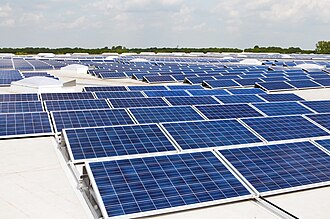
 Solar panels photo supplied
By Alkemi Collective on behalf of SAPVIA
The South African Photovoltaic Industry Association (SAPVIA) has welcomed Eskom’s confirmation that it will not fine or disconnect residential customers who miss the 30 September 2026 deadline to register their small-scale embedded generation (SSEG) systems.
The association maintains, however, that registration, safety compliance and grid visibility remain essential as South Africa’s rooftop solar market continues to grow.
Eskom and several municipalities had previously warned that customers with unregistered solar systems could face penalties of up to R30,000, or have their electricity supply disconnected.
Following pushback from stakeholders over the utility’s authority to impose such measures, Eskom has now confirmed that registration deadlines alone will not trigger fines or disconnections.
“SAPVIA supports the legal, streamlined and cost-effective registration of solar systems,” says Sim Khuluse, technical and policy manager at SAPVIA.
“Under the Electricity Regulation Act, distributors are required to keep a register of embedded generation facilities to protect grid stability and safety, but that requirement was never meant to be enforced through fines and disconnection threats.
Registration has to be built on trust and cooperation, not fear.
“Punitive measures don’t make the grid safer; they create friction in South Africa’s energy transition at exactly the point where we need more households on board,” says Khuluse.
SAPVIA points to the amended Schedule 2 of the Electricity Regulation Act, which governs facilities with a capacity of no more than 100 kilowatts.
The framework requires that such systems comply with the relevant code, have an approved point of connection, and be recorded in a register kept by the distributor, a mechanism designed to support grid stability and institutional accountability, not to penalise consumers for investing in their own energy security.
Beyond registration itself, SAPVIA continues to emphasise the importance of safety compliance, including a valid Certificate of Compliance (CoC) issued by a registered electrical professional for every installation.
The association’s flagship PV GreenCard programme reinforces this push for quality and safety across the sector, providing comprehensive “as-built” documentation and vetting the installers behind each project.
SAPVIA’s most recent industry analysis puts South Africa’s cumulative installed solar PV capacity at more than 11.8 GW, cementing the country’s position as Africa’s leading solar market and one of the top 20 globally.
Sustaining that momentum, Khuluse argues, depends on regulation that enables rather than punishes the households and businesses driving the shift to solar.
“With installed solar capacity now above 11.8 GW, South Africa is Africa’s leading solar market and a global top-20 player.
Tools like the PV GreenCard and mandatory CoCs help ensure every installation matches that world-class status on safety and quality,” Khuluse says.
“We’re calling on Eskom, municipalities and regulators to keep working with industry to make registration simple, accessible and affordable, so that no household is punished for helping secure South Africa’s energy future.”
SAPVIA says it remains committed to working alongside regulatory bodies, utilities and industry stakeholders to streamline standards, advocate for fair policy, and ensure that South Africa’s decentralised energy future is both safe and inclusive.
About SAPVIA
The South African Photovoltaic Industry Association (SAPVIA) is the recognised representative voice of South Africa’s solar PV industry, representing almost 500 members across the value chain.
Established in 2011 under the Green Economy Accord, SAPVIA champions the sustainable growth of solar PV and South Africa’s transition to a competitive, low-carbon economy.