
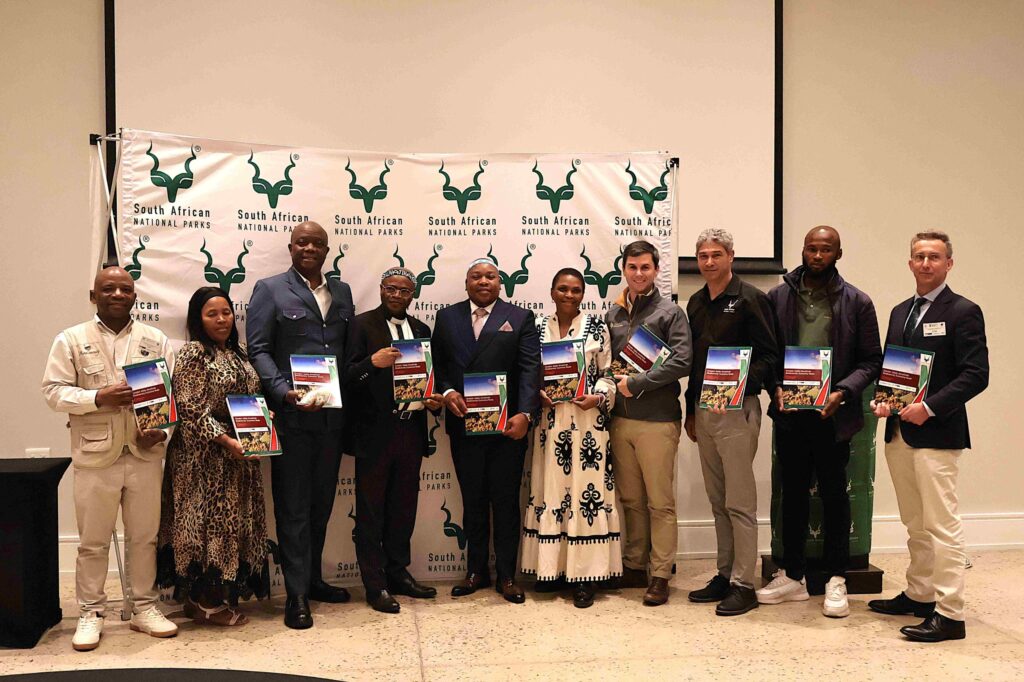
 Senior delegates gathered in Port Alfred for the launch of the Biodiversity Economy Master Plan, including Deputy Minister of COGTA Prince Zolile Burns-Ncamashe (4th from left), His Majesty King Vululwandle Sandile of the AmaRharhabe Kingdom (5th from left), Dr Howard Hendricks Managing Executive: Conservation (3rd from right), World Bank Practice Manager for East and Southern Africa Paul Martin (far right) photo supplied
By JP Louw
SANParks Head of Communications and Spokesperson
The Greater Addo-Amathole Biodiversity Economy Node (GAA BEN) Master Plan was formally launched during the 5th Multistakeholder Coordination Forum, held from 31 March – 01 April 2026, at Royal Saint Andrews in Port Alfred.
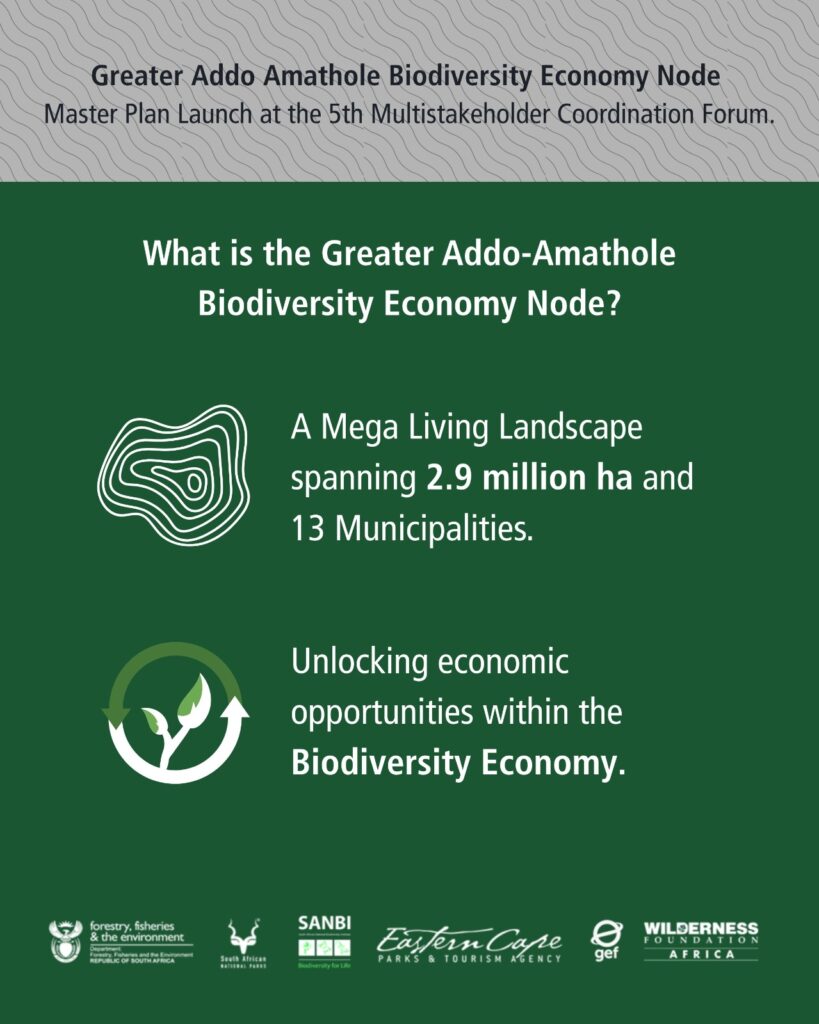
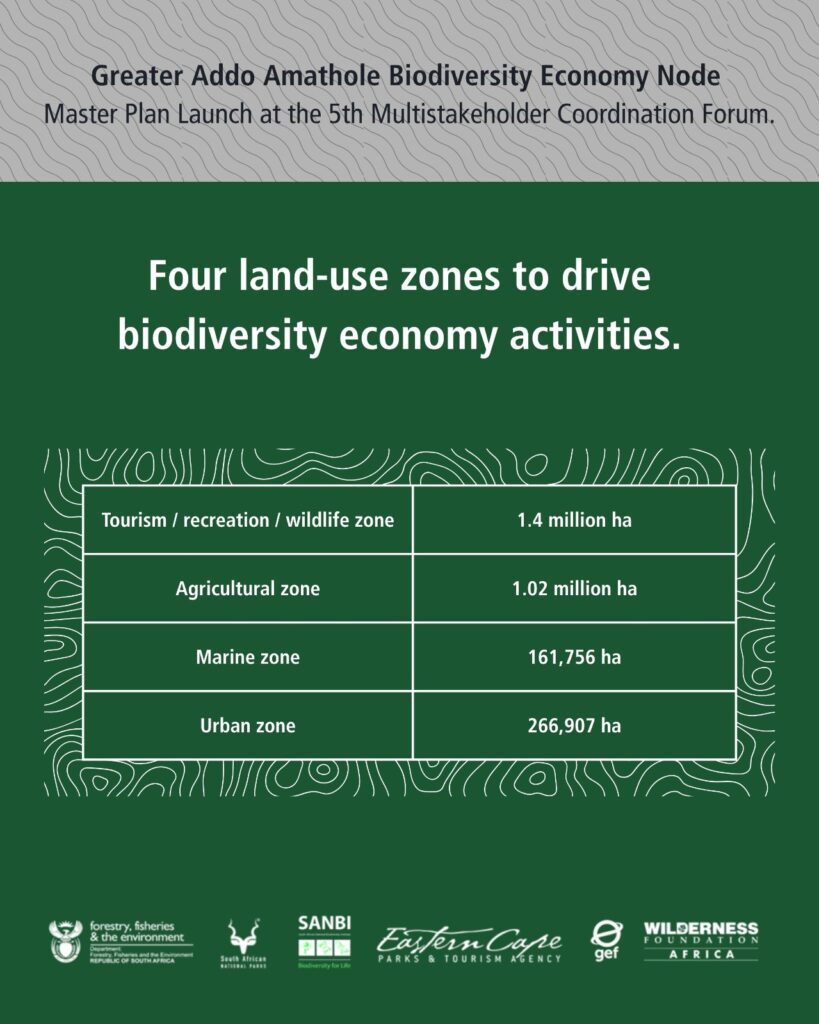
The Master Plan is the result of a multi-year consultation process and sets out a clear framework for unlocking biodiversity economy opportunities across the node.
Its launch signals the transition from planning to implementation.
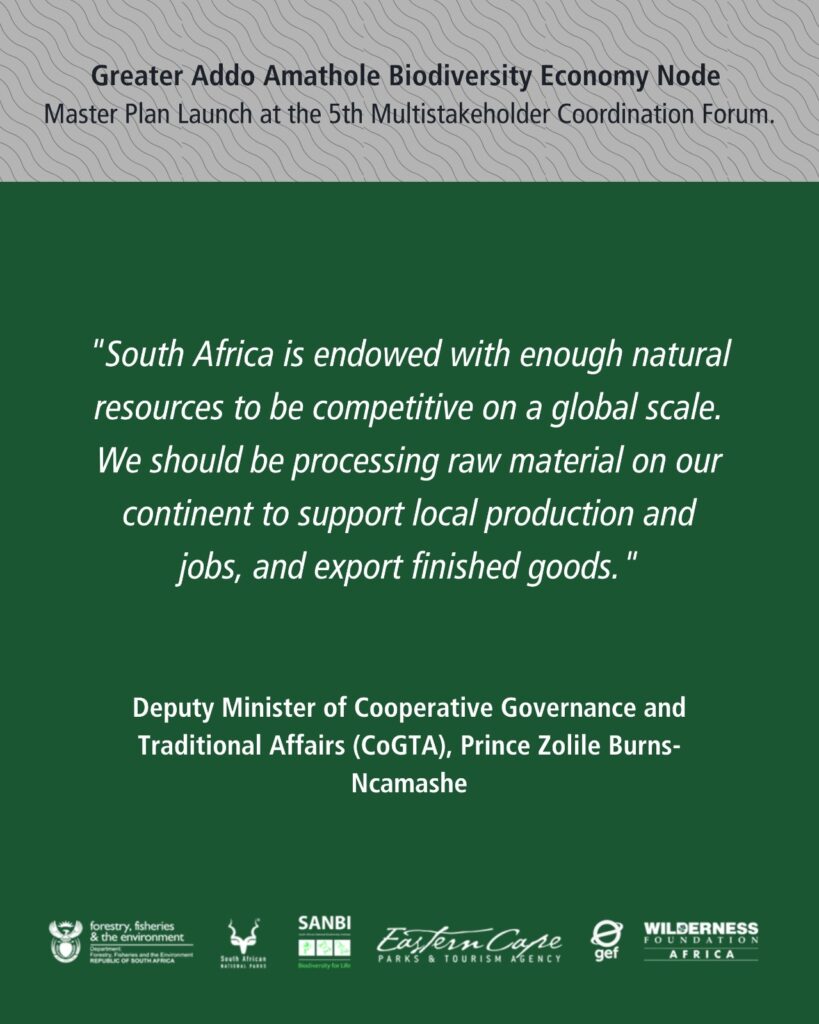
The launch was attended by Prince Zolile Burns-Ncamashe, Deputy Minister of Cooperative Governance and Traditional Affairs (CoGTA), who highlighted that South Africa is endowed with enough natural resources to be competitive on a global scale.
He emphasised we should be processing raw material on our continent to support local production and jobs, and export finished goods.
Also in attendance was His Majesty King Vululwandle Sandile from the AmaRharhabe Kingdom, who emphasised that this plan must not only exist on paper.
It must translate into real, practical programmes that benefit our communities.
This project is a major collaborative effort funded by the Global Environment Facility (GEF7) and coordinated by the Department of Forestry, Fisheries and the Environment (DFFE).
SANParks is leading the implementation in the landscape alongside the Eastern Cape Parks and Tourism Agency (ECPTA).
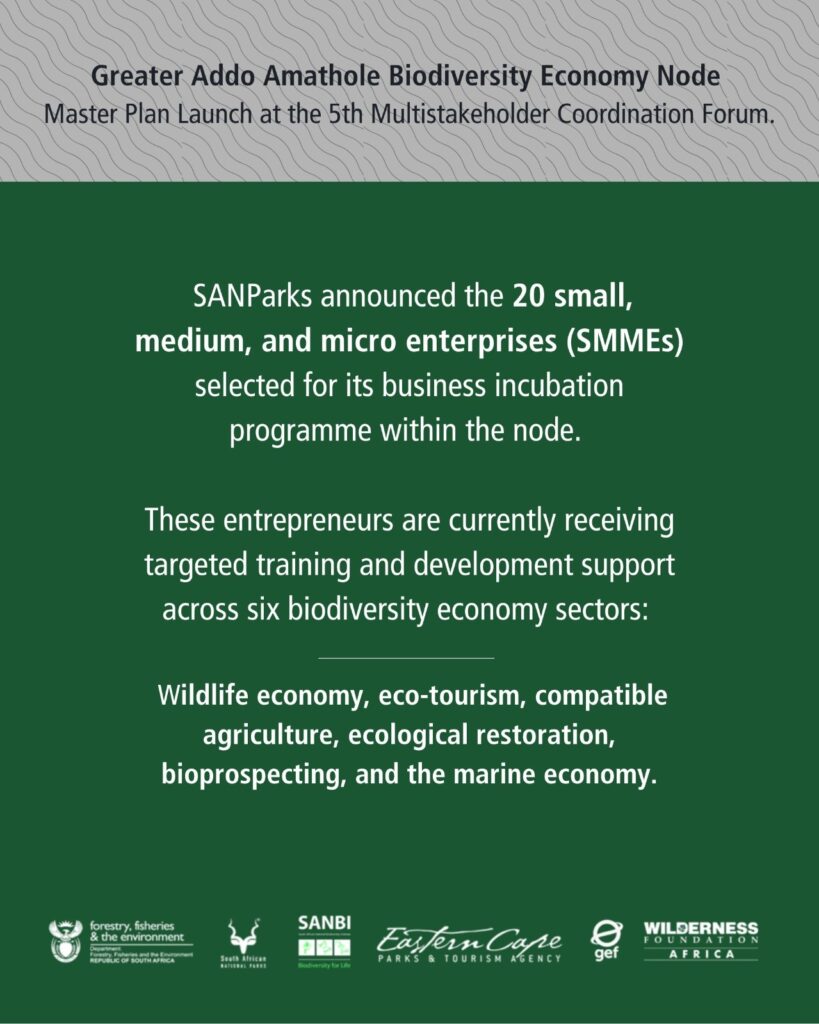
Alongside the Master Plan launch, SANParks announced the 20 small, medium, and micro enterprises (SMMEs) selected for its business incubation programme within the Addo-Amathole node.
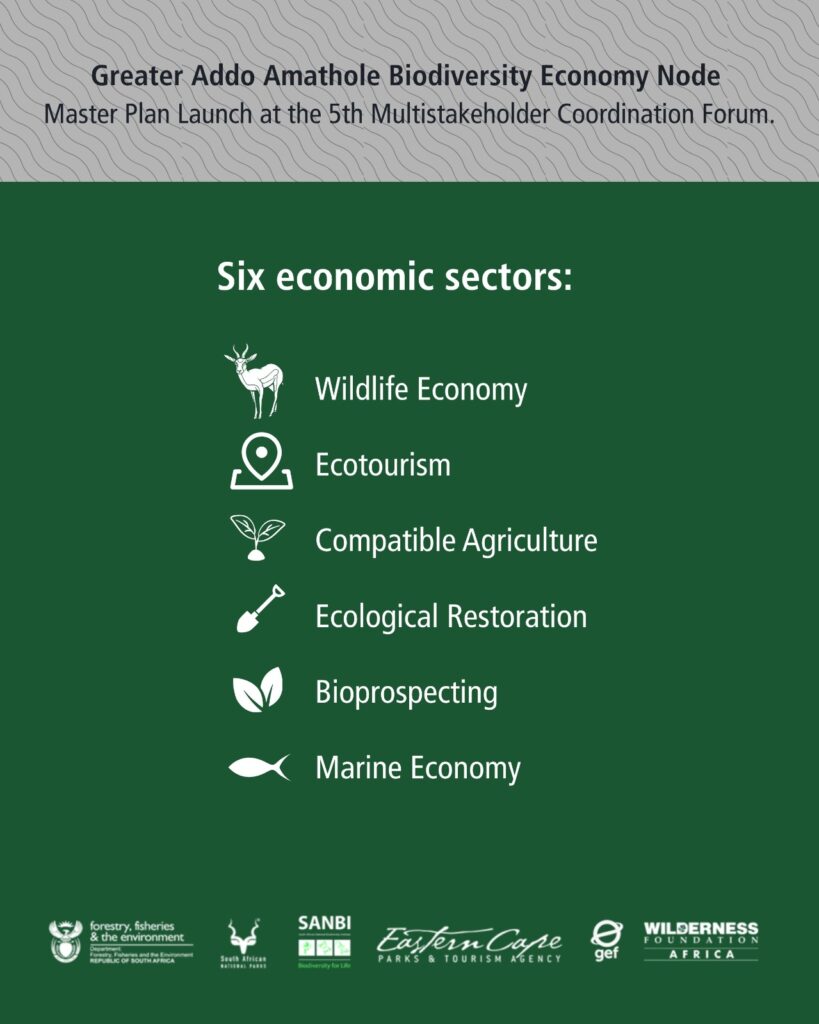
These entrepreneurs are currently receiving targeted training and development support across six biodiversity economy sectors: the wildlife economy, eco-tourism, regenerative agriculture, ecological restoration, bioprospecting, and the marine economy.
The forum is also advancing the Conservation Stewardship programme in the node, which aims to partner directly with communal and private landowners for improved land-use practices.
Day two of the forum focused on co-developing an implementation plan with stakeholders, charting a clear path forward for the node.
The Greater Addo-Amathole Biodiversity Economy Node is one of three Biodiversity Economy Nodes being established nationally, designed to demonstrate that ecological conservation and sustainable socio-economic development can thrive side by side.
The Master Plan aims to position the Greater Addo-Amathole region as a leading biodiversity economy hub, aligned with SANParks’ inclusive conservation efforts for Mega Living Land and Seascapes, and South Africa’s global biodiversity commitments.
The two-day forum brought together more than 180 stakeholders from government, communities, civil society, academia, and the private sector, marking a significant milestone in the journey to establish a thriving biodiversity economy in the Eastern Cape.
Tshwane Talks readers have been able to read stories in this publication for free for over two years now. We still want our readers to access our stories for free, but we are asking those among our readers who can afford it to contribute at least R30 a month to cover some of the costs of publishing this independent, non-aligned online newspaper which gives a voice to all sectors of society irrespective of race, colour, creed, religion, or political affiliation. You may make your contribution by depositing at least R30 a month into Tshwane Talks' bank account. Details are as follows:
Bank Details
Bank: Standard Bank
Account Number: 10225548834
Account Type: Cheque Account