

Address by President Cyril Ramaphosa on National Women’s Day

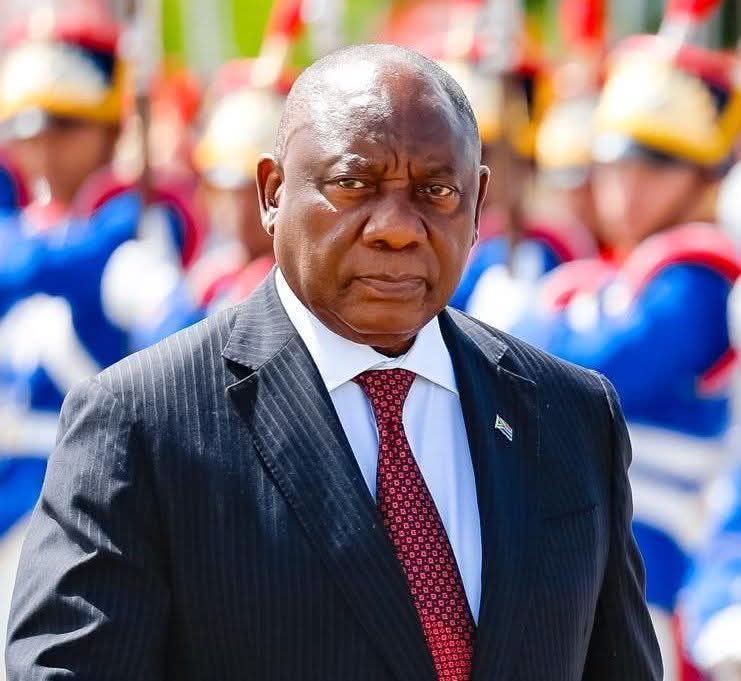
 President of South Africa Cyril Ramaphosa at Union Buildings in Pretoria photo supplied
ADDRESS BY PRESIDENT CYRIL RAMAPHOSA ON NATIONAL WOMEN’S DAY
UNION BUILDINGS, TSHWANE
9 AUGUST 2026
CHECK AGAINST DELIVERY
Programme Director,
Minister in the Presidency for Women, Youth and Persons with Disabilities, Ms Sindisiwe Chikunga,Minister of Sport, Arts and Culture, Mr Gayton McKenzie,Chief Justice Mandisa Maya,Speaker of the National Assembly Ms Thoko DidizaPremier of Gauteng, Mr Panyaza Lesufi,Ministers and Deputy Ministers,Isithwalandwe-Seaparankoe Mama Sophie Williams-de Bruyn, one of the leaders of the 1956 Women’s March,
Nobel Peace Laureate, Ms Malala Yousafzai,
Premiers,Members of Parliament,
Representatives of Chapter 9 Institutions and the judiciary,Members of the diplomatic corps,Representatives of political parties,
Representatives of business, labour, academia and civil society,Distinguished Guests,
Fellow South Africans,
Sanibonani. Dumelang. Molweni. Goeie môre. Lotjhani. Avuxeni. Ndi matsheloni. Good morning.
Today is no ordinary commemoration.
It is one of the most important days on our national calendar.
National Women’s Day is a day on which we honour the women of South Africa. But it is also a day of profound significance for our entire country.
This is because the Women’s March of 1956 was not a footnote in our struggle for freedom.
It helped to change the course, the character and the leadership of that struggle.
It demonstrated that women were not merely supporters of the struggle. They were its leaders, its organisers and its authors.
Seventy years ago today, at least 20,000 women from across South Africa gathered here at the Union Buildings.
They came to the very seat of apartheid power.
Prime Minister JG Strijdom chose not to receive them. He ran away
But his absence did not diminish their presence.
The women left at his door petitions bearing more than 100,000 signatures.
They then stood in disciplined silence for thirty minutes.
It was a silence more powerful than any speech the apartheid government could have made.
Seventy years ago, 20,000 women gathered on these grounds and stood in silence for thirty minutes.
But theirs was not the silence of fear.
It was not the silence of submission.
It was the silence of courage gathering its strength.
It was the silence of women who knew that they carried the justice of their cause within them.
For thirty minutes, there was no chant, no speech and no cry. Yet their silence said everything that needed to be said.
That silence held the pain of every woman humiliated by the pass laws.
It held the anger of every mother whose family had been torn apart.
It held the hopes of every daughter who dreamed of growing up free.
It held all the words that apartheid refused to hear.
The Union Buildings may have been quiet, but the conscience of a nation was being awakened.
Their silence was not empty. It was filled with dignity, discipline and determination. It was louder than any command issued by the apartheid state.
It was a silence that unsettled the powerful, inspired the oppressed and echoed across generations.
Today, as we stand where they stood, let us remember those thirty minutes.
Let us hear, within that silence, the footsteps of 20,000 courageous women.
In remembrance of those brave women I aske that we stand and be silent in their honour for a while.
After they stood silent then then their voices rang out:
Wathint’ abafazi, Strijdom!
Wathint’ imbokodo, uza kufa!
You have touched the women. You have struck a rock. You will be crushed.
On that day, the Prime Minister may have occupied the highest office in the land, but the true power was gathered on the lawns of the Union Buildings.
We salute the four women who led the march: Mama Lilian Ngoyi, Mama Helen Joseph, Mama Rahima Moosa and Mama Sophie Williams-de Bruyn.
Mama Sophie, who was only eighteen years old at the time, we are deeply honoured by your presence today.
We thank you for your courage, your lifetime of service and your continuing witness to our history.
We honour every woman who marched with you.
We know the names of some, but not yet the names of all.
We therefore welcome the work of the Ahmed Kathrada Foundation and the Sophia and Henry De Bruyn Legacy Foundation through the “Write Her into History” campaign.
This campaign is restoring the names and stories of the women of 1956 to our national memory.
I call on every family and every community that knows the name of a woman who took part in the march to come forward.
Let us complete this roll call of honour.
Let us ensure that history remembers not only the leaders at the front, but the thousands who gave the march its strength.
Fellow South Africans,
The women of 1956 were protesting against passes, but their message reached far beyond the pass laws.
They challenged the idea that women should be confined to the home, silent in public affairs and subordinate to men.
They challenged discrimination based on both race and gender.
They made clear that no nation can be free while its women are not free.
The march did not emerge from nowhere.
It was part of a long tradition of women’s resistance.
In 1913, women led by Charlotte Maxeke rose in Bloemfontein against the imposition of passes.
In the decades that followed, women organised in communities, churches, factories, farms and trade unions. They resisted municipal beer halls, low wages, forced removals and racial oppression.
In 1954, the Federation of South African Women adopted the Women’s Charter. In 1955, women carried their demands into the Congress of the People at Kliptown.
They demanded the vote. They demanded equal pay for equal work and equal opportunity in employment.
They demanded equal rights in marriage, property and the guardianship of children.
They demanded education, childcare, housing, land, water, healthcare and social security.
They understood that freedom is not an abstract idea.
Freedom must be present in the home, in the workplace, in the classroom, in the clinic, in the law and in the economy.
The petition presented here in 1956 declared:
“We shall not rest until we have won for our children their fundamental rights of freedom, justice and security.”
Seventy years later, that pledge still speaks directly to us.
We have made undeniable progress.
Thirty years ago, we adopted a Constitution that recognises non-sexism as a founding value of our democracy and guarantees every woman the rights to equality, dignity, freedom and bodily integrity.
Women have the right to vote, to hold public office, to own property and land, to inherit, to choose whom to marry and to participate fully in every sphere of society.
Women lead institutions that are vital to our democracy.
Today, women serve as Chief Justice, Speaker of the National Assembly, Chairperson of the National Council of Provinces, Public Protector and Auditor-General.
Women are ministers, mayors, judges, traditional leaders, diplomats, police officers, soldiers, entrepreneurs, farmers, scientists, engineers, academics, artists and athletes.
Women have made significant gains in higher education and continue to break barriers in fields once closed to them.
These gains matter. They were fought for. They must be defended.
South Africa ranks highly on global indices for women’s empowerment, including for gender parity, educational outcomes, financial inclusion, and political representation and decision-making.
We are proud of how far we have come.
We are proud to stand on the shoulders of giants, the izimbokodo of 1956.
As a country we have been consistent that there can be no human rights without women’s rights.
There can be no progress in society without the empowerment of women.
We cannot achieve social justice without gender equality.
This conviction is rooted in our commitment to building a South Africa that is united, non-racial, non-sexist, democratic, prosperous and free.
These achievements were not freely given.
And having attained our own freedom, it is our duty to stand in solidarity with the victims of sexism and gender apartheid, wherever they are.
We are honoured to have with us here today Ms Malala Yousafzai, who paid a heavy price for her activism.
A cruel ideology tried to silence you, but you rose to become one of the most strident voices for the emancipation of women in our world today.
Malala, thank you for being here today. We welcome you.
The struggles of women for equality and emancipation do not know boundaries of geography, language, religion, race, colour or class. And the struggles of women are far from over.
This year’s theme is Empowered women empower nations. We know that empowered women and girls empower South Africa.
That means that we must work as a society to remove every obstacle that stands between a woman and her ambition.
Women are more than half of our population, but they do not yet hold an equal share of our country’s wealth, its land or its enterprises.
Too many women are without work. Too many earn less than men for doing the same work.
Too many carry the burden of caring for families and households, labour that goes unrecognised and uncounted.
This must change. As a government we are working to change this.
We are opening public procurement to women-owned businesses, so that what government spends helps to build women entrepreneurs.
Through the Women Economic Assembly we have been drawing women-owned enterprises into the value chains of our major industries.
We are widening access to finance, to credit and to markets.
And we are ensuring that women hold title to the land they work.
There can be no empowerment without education.
Today, more women than men are enrolled in our universities and colleges. They excel in school.
But too few of them enter engineering, science, technology and the artisanal trades, where so many of the opportunities of tomorrow will lie.
We must work to change that.
We are bringing care closer to the women in rural areas, farms and villages.
A woman who is skilled, who earns her own income and who enjoys good health is a woman able to determine the course of her own life.
That is the freedom we are working towards.
We know too well that the women of our country will not be truly free until we rid our society of the violence that men perpetrate against women.
In 1956, women lived in fear of being arrested for not having a pass.
Today, women live in fear of the gender-based violence that stalks them in the streets, even in their homes.
Violence against women and children is not confined to any one particular community.
It affects rich and poor, young and old, black and white.
That is why we classified gender-based violence and femicide as a national disaster.
We did so, so that we could harness all the resources and capabilities of the state to end these crimes.
We have established this Council because gender-based violence and femicide is not a women’s problem. It is a problem of society.
It is a problem of violent men.
Overcoming this scourge therefore demands that men and boys step forward and say: Not in My Name.
It demands that men and boys be part of the solution.
We must prevent this violence, as we are doing, by working with young men, with the support of traditional, community and religious leaders.
We need to steer men away from behaviours and mindsets that breed violence against women.
We need to break the silence that renders us complicit in this crime.
It is not only the perpetrators of such acts that are guilty.
It is also those who choose to look away, to say it’s not their problem.
The guilty include those who seek to condone or justify gender-based violence on the grounds of culture, religion or patriarchal social norms.
There is no justification whatsoever for sexual harassment, for physical or mental abuse, for rape or for murder.
Not how women dress or how they behave. Not because some favour is given.
Not because they leave a relationship. Not because they are a junior employee.
Not because they believe themselves equal to men.
Violence against women and children is not a personal matter. It is a crime.
And we can no longer remain silent.
Today we call on all of society to join hands to combat this scourge.
So that South Africa’s women enjoy the most fundamental freedom of all, freedom from fear.
Even in the midst of hardship and devastation, women rise.
This year’s commemoration places particular emphasis on improving women’s access to quality healthcare.
This is fundamental to equality, dignity and freedom.
Quality healthcare for women means that every woman must receive care regardless of her income, where she lives or whether she has a disability.
It means safe pregnancy and childbirth, dignified reproductive healthcare and access to family planning.
It means that girls and young women have the knowledge and services they need to prevent HIV infection.
It means expanding vaccination and screening to prevent cervical cancer, and ensuring timely treatment when illness is detected.
It means that survivors of sexual and domestic violence are treated with compassion, privacy and respect.
It means bringing care closer to women in rural communities, on farms and in informal settlements.
A woman who is healthy, educated, safe and economically independent is better able to determine the course of her own life.
By investing in women’s health, we invest in the health, productivity and future of our nation.
Yet we know that no account of women’s freedom in South Africa can avoid the terrible reality of gender-based violence and femicide.
Last year, government classified gender-based violence and femicide as a national disaster.
This classification must now produce visible and measurable change.
Gender-based violence is not a women’s problem.
Fellow South Africans,
The struggle for women’s freedom has no borders.
We are honoured today by the presence of Ms Malala Yousafzai.
Malala, an attempt was made to silence you because you insisted that every girl has the right to learn.
You refused to be silenced. You became a steadfast global voice for the education, dignity and freedom of girls.
We welcome you to South Africa and thank you for standing with us on this historic day.
Through you, we extend our solidarity to the women and girls of Afghanistan, who are being systematically excluded from education, employment and public life.
South Africans know what it means when the law is used to determine where people may go, what they may learn, what work they may do and what place they may occupy in society.
No culture, religion, government or ideology can justify reducing women to lesser human beings.
The freedom of women is indivisible.
An injustice to women anywhere diminishes the freedom of people everywhere.
Fellow South Africans,
On 9 August 1956, the women did not come here to ask the state to praise them.
They came to demand that the state end its injustice against them.
Seventy years later, women do not ask to be applauded for surviving inequality.
They demand that equality be made real.
We as the government will continue to do everything in our power to ensure that we foster and ensure that we make equality between women and men real in all aspects of our national life.
The measure of this anniversary will not be the speeches we deliver or the ceremonies we hold.
It will be whether a girl can grow up safe, healthy and confident in her future.
It will be whether a young woman can study, find work and be paid fairly.
It will be whether a woman entrepreneur can obtain finance and gain access to markets.
It will be whether a woman farmer can own the land she works.
It will be whether a mother can receive quality healthcare close to where she lives.
It will be whether a survivor of violence receives protection and justice.
It will be whether every woman is treated as a full and equal citizen of this country.
Each generation must answer the question posed by the women of 1956:
Will we fear the power of women, or will we build our nation with it?
We will ensure that the answer is found in our laws, in our budgets, in our institutions, in our homes and in our conduct towards one another.
Let us honour the women of 1956 by delivering the future for which they marched.
We commit to build a South Africa in which no woman’s potential is limited by poverty, prejudice, violence or discrimination.
We will build a nation in which women are equal in law, equal in opportunity, equal in safety and equal in power.
Wathint’ abafazi, wathint’ imbokodo.
The women of South Africa have shaped our freedom and we thank them.
Together, they will shape our future.
I thank you.