

ABOUT PATRIOTISM

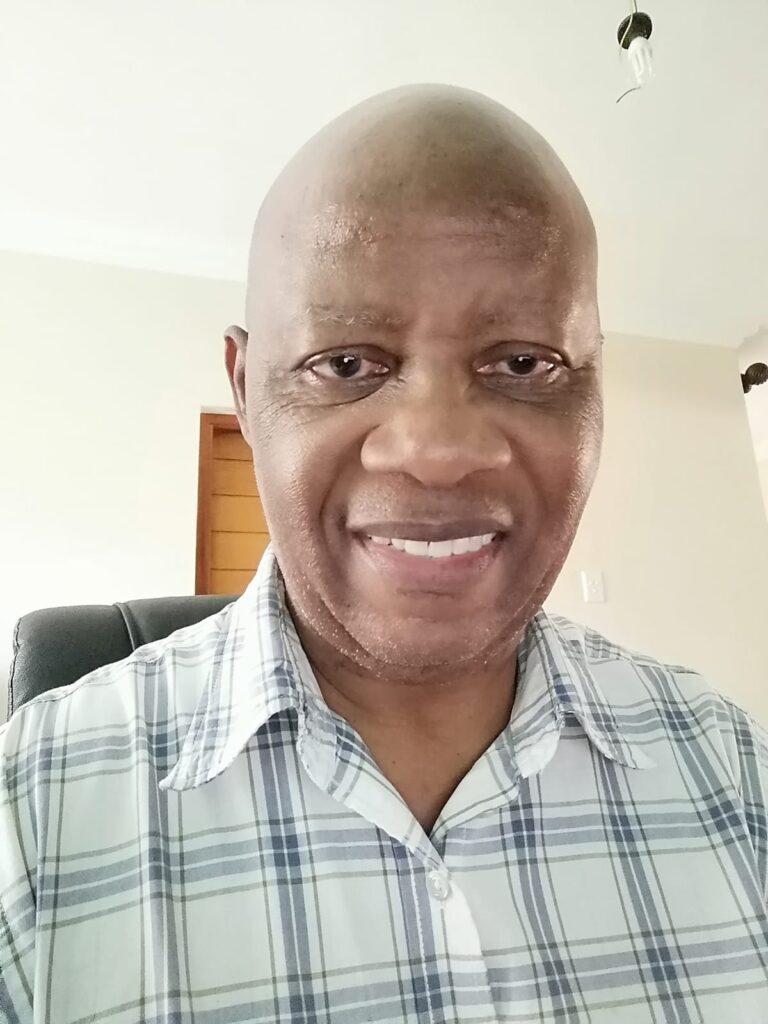 Selby Vusimusi Moyo Activist
By Selby Vusimusi Moyo
Activist
There are certain value pointers that are fast vanishing from this territory’s vocabulary.
To the point that we just live without anywhere to belong to.
Words like patriotism, for instance, are hard to hear or pronounce.
Of course, this word patriotism will be hard to come by because we do not have people who could take after its root word, patriot.
Patriot is defined in simple terms as lover of one’s country who is loyal and ready to sacrifice everything for their country.
It follows therefore that patriotism is that love and loyalty and a sense of service and sacrifice that one expresses towards his or her country.
Our experience and observation in and of this territory teĺl us different.
In the first place, we — especially African people (sorry for ‘Blacks’, it is a troubled term or descriptor!) are not sure whether or not they have a country.
They have been made to believe that their native “land belongs to all who live in it”, which means anyone, whoever it is, and wherever they may be, can lay claim to it.
Perhaps this is why Africans in this territory have not been able to have an appropriate name for it.
It will be those people who do not have a sense of self, as well as those who came as indentured laborers or slaves who will support this sell-out paradigm of land belonging “to all who live in it.”
The reason fo this is simple and straight forward: they do not have a spiritual attachment to the land, and thus no claim to it.
Hence, they may resist the paradigm of those who confidently want to claim the land as their center, or that which centers their spirituality and which gives them identity.
They are afraid they may be thrown outside of that center.
Yet their identifying themselves with the struggle of the colonised natives gives them protection!
The statement above affects other issues that may fill us with patriotism and make us patriots.
The most important is that sense of pride which is produced in one belonging to a nation, which is called nationalism.
Nation is a collective noun for people in one country who share common values which make them patriots.
Thus, we see a close relationship between what is called nationhood, a conscious realisation of belonging by a people, nationalism, which is also a people’s driving spirit for their becoming, and patriotism.
Together, they are the building blocks for anything called a solid nation or country.
How can we be patriotic and have a sense of nationhood when when we have different orientation and interests? To start with, we are still broken down into ethnic groups and tribal affiliations.
Even the constitution we are supposed to pledge allegiance to is divided among what former President Thabo Mbeki alluded to as “two nations, one is Black, and the other white”! The constitution has been found to serve the interests of a particular ‘nation’ than it does the other.
Indeed, from the outset it protects the stolen wealth accumulated by the ‘white nation’, and keeps the ‘black nation’ perpetually in poverty.
This does not, and should not, create doubt because the declaration was made (in the constitution) with that protection in mind.
The African is still trying to break the 1913 13% allocation while the distribution is still pretty much in the same place.
With such contradiction, it remains impossible to have a unitary nation that can produce patriotism and nationhood.
Further than that, the two nations of which Mbeki spoke have different attitudes and senses of adherence to land.
The ‘white’ one lays claim to the land because of colonial conquest, while the ‘black’ one wants to reclaim what it has lost.
Here we have to be careful because the latter have lost more than just land. They have also lost a sense of self.
Also they have lost the spiritual attachment to that which gives them identity, hence they do not quite know themselves but were made to use an identity which was meant for them to be looked down upon, that made them sub-humans.
Indeed, in all human existence, it is people who have an ulterior motive, a devilish agenda, who would engineer such nations as ‘white’ and ‘black’.
To a great extent, this has created a particular psychosis in those regarded as ‘black nation’.
For this is bound to happen when people don’t know who they are!
It is the attachment to land that gives people their sense of self and identification.
This gives us another dimension to patriotism, which is self-determination. Only a united nation in one territory will have the capacity to self-determination.
A multitude of nations will have problems because each one will be dictated by its own experiences and the propensity to protect what they deem theirs, and seek to be regarded as a stand-alone entity.
Thus creating problems which may lead to the balkanisation of a given territory.
Take, for instance, the case of Orania and the separate development of other Afrikaner enclaves.
Or take the secessionist moment of the Western Cape, which is another example.
But we cannot forget the demand for autonomy of the Zulu people in the earlier years of this so-called democracy.
Of course, we must also include the fact that that demand for autonomy came about because the Zulu people regard themselves as a nation.
We then have others claiming to be nations — and rightfully or not — demanding the same rights and privileges enjoyed by the ‘Zulu king’.
We must acknowledge the fact that we had strong tribalism brewing with stickers proclaiming tribal affiliations of various African groups.
Such sentiments, which are momentarily muted, contribute to putting people in a state of doubt and directionlessness.
Which brings us to terms like diversity, which sounds innocent but actually supposes division.
We have already stated that there can be no patriotism or nationhood where people are not united, as grossly divided we have proven to be in this territory.
That we need not even explore the term more than it is convincing that it is divisive.
We must find it strange that after centuries of being together but separate in one territory we suddenly want to consider ourselves patriotic and imbued with a spirit of nationalism.
If anyone believed in what came to be known as ‘Madiba Magic’, then be assured, where it involves patriotism and nationalism, that Magic will remain what it is, just a myth.
The truth is that there can never be a kind patriotism or nationalism based on being South African.
It is unfortunate that most of us have not noticed that we are individuals without land, but floating in an entity that belongs to investors.
We cannot pledge patriotism or develop a sense of nationalism where we are mere individuals who have no stake in that entity.
We are individuals in a territory we are pretty much detached from.
We must stop and ask ourselves whether patriotism and nationality can be reality in an entity listed on the stock market.
We must stop and ask whether we are considered stakeholders or we are merely being toyed about with by the few whose interests are well secured and still want them protected, still, while we are the pawns to advance them yet!
To conclude, I want to say that from what we have observed in the last thirty years or so, there is nothing that can convince us patriotism and related nationhood and nationalism, let alone the existence of a nation, have taken root.
The remnants of racism have resurfaced time and again.
From among other attitudes Africans being killed and fed to wild animals; comments about how apartheid was justifiable to keep African people oppressed; Africans being referred to as refugees when they are in one province because they must be confined to other regions of the territory.
But perhaps the most devastating behaviour and thinking is the criminality and corruption perpetuated by those who claim to be liberators of the majority people of this territory.
If anything, they have greatly aided in keeping African people where the oppressor and capitalist interests want them.
This group has always wanted to convince everyone they are working for everyone when all they do is destroying the little that could have helped develop this territory.
We are yet to see if what they do contributes to fostering patriotism or building nationhood.
At the moment they are involved in sloganeering, while what they call a country goes to the dogs, so to speak.
Meanwhile patriotism and all that relates to it remain elusive. We have to think very hard before we consider using the term patriotism or patriot… We cannot simply throw concepts around and hope they become the reality we want when there are destructuve attitudes and behaviours to the contrary.
We must realise patriots and patriotism are born of wars for legitimate causes.
Ours, which is for the very basis of our patriotism and centering spirit, has barely started; I don’t understand why people are made to believe it is over.
The fight for our fatherland is about patriotism. It is something we cannot farce about…