

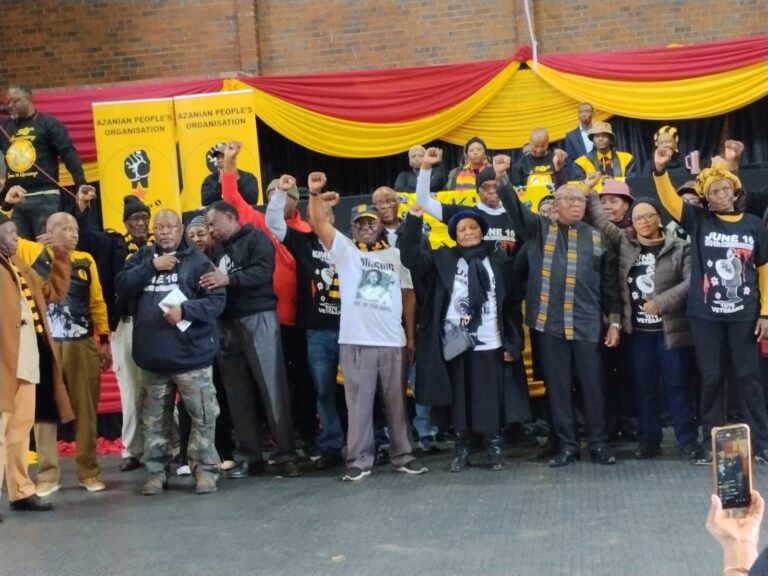
Azapo Commemorate June 16 in Soweto

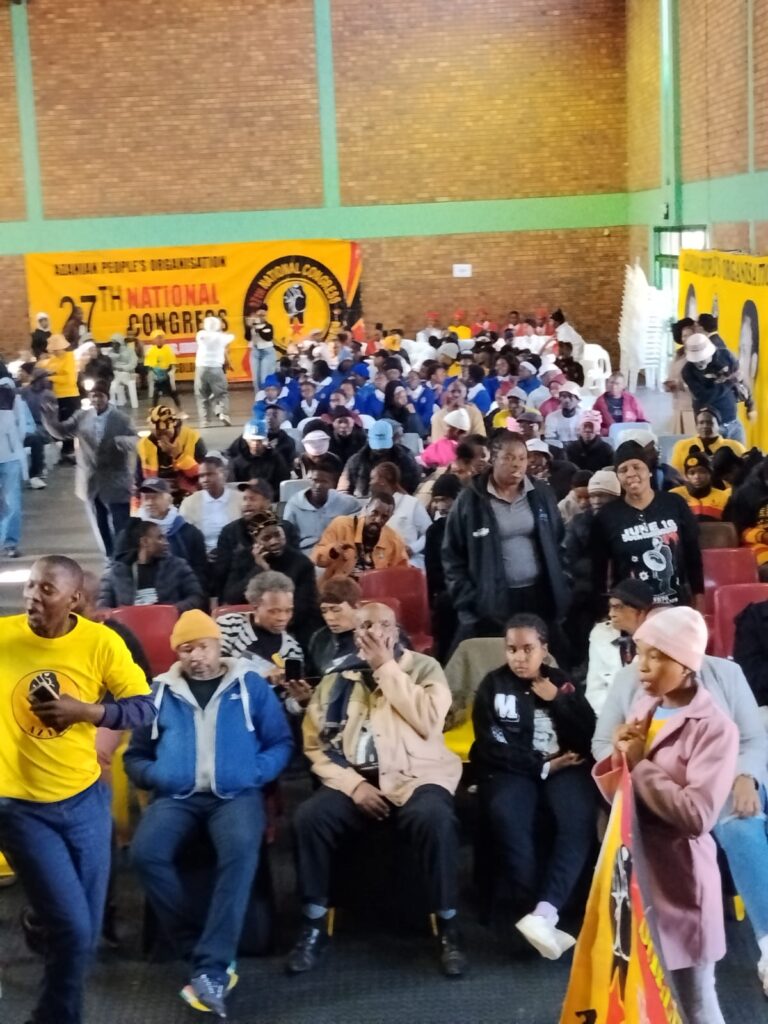
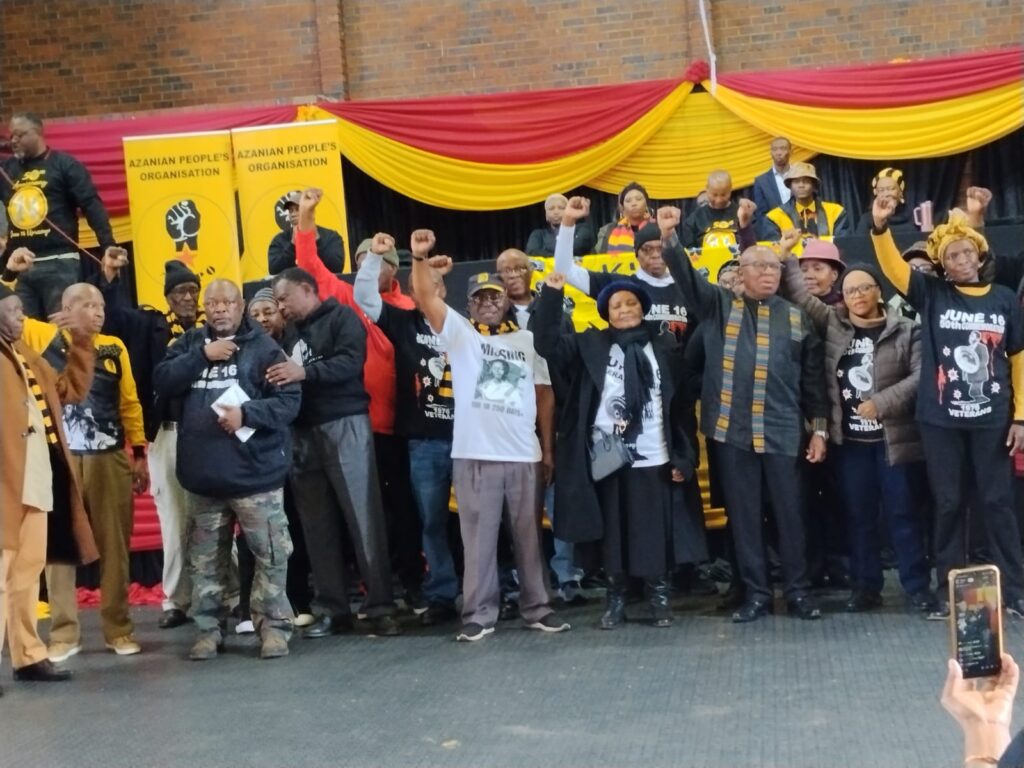 AZAPO members commemorate June 16 in Soweto
By Pitso Hlasa
AZAPO Head of Political Education
As a matter of tradition AZAPO has since the aftermath of the 16 June 1976 Massacre commemorated the day religiously with dignity and honour to those youths that dared to risk their lives to confront a system that was meant to hold them in bondage and perpetual servitude.
The issue of Afrikaans as a medium of instruction was just but a trigger to long-held anger by the students against the entire system of apartheid that defined class and social disparities in the Republic of South Africa.
The protests were a result of the Black Consciousness Movement which has a deliberate mass mobilisation programme in all spheres of life including in the far-reaching areas of our country.
The Black Power determination demonstrated by the class of 1976 was in fact a sign that the people had started realising their “psychological liberation” as espoused by Steve Biko’s Black Consciousness philosophy.
This year’s event, which marks exactly half a century of the event that took place in Soweto and spread to other parts of the country, was attended by among others the June 16 veterans, the Tsietsi Mashinini and Kgotso Seatlholo families, as well as the former and current leadership of AZAPO.
However, most important of all is that a number of high school learners around Soweto and West Rand were in attendance to pay their respects to the Class of 1976.
One speaker after another alluded to the fact that the events of 1976 were not spontaneous but rather a planned political activity that manifested itself in the form of the struggle against Afrikaans.
Speaking at the graveyard, June 16 veteran Majakathata Mokoena lambasted the ruling party and its allies for falsifying the narrative of the June 1976 events.
Mokoena explained that the fight was about social injustices that were racially-motivated.
He said their struggle as 1976 students was to demand a total overhaul of the education system and economic freedom.
Mokoena lamented the fact that the Congress Movement conveniently ignored those that were skilled and qualified to deliver meaningful education and an economy that redresses the inequalities crated by the system.
Wreaths were laid at the graves of late 1976 student leaders Tsietsi Mashinini and Kgotso Seatlholo.
AZAPO president Comrade Nelvis Qekema pointed out that 1976 student leaders like Tsietsi Mashinini Mashinini and Kgotso Seatlholo died for free education at least from kindergarten until the first university degree.
AZAPO brought back the remains of Tsietsi Mashinini from exile in 1990 to be reburied in the country of his birth.
AZAPO is still convinced that Mashinini was killed and is therefore calling for the opening of an inquest regarding his mysterious death.
At a ceremony held later at the Pimville Community Centre kids who wrrote essays about 16 June 1976 were awarded prizes and books autographed by AZAPO’s former President Dr Mosibudi Mangena, who is also the first Minister of Science and Technology in a democratic South Africa.